

Looking to add beautiful texture and dimension to your crochet projects? The HDC2CL stitch, also known as the half double crochet 2 cluster stitch, is a simple yet versatile technique that creates a soft, textured fabric perfect for blankets, scarves, hats, and more.
Whether you're expanding your crochet skills or following a pattern that calls for this stitch, this guide will show you exactly how to make an HDC2CL stitch with easy-to-follow instructions.
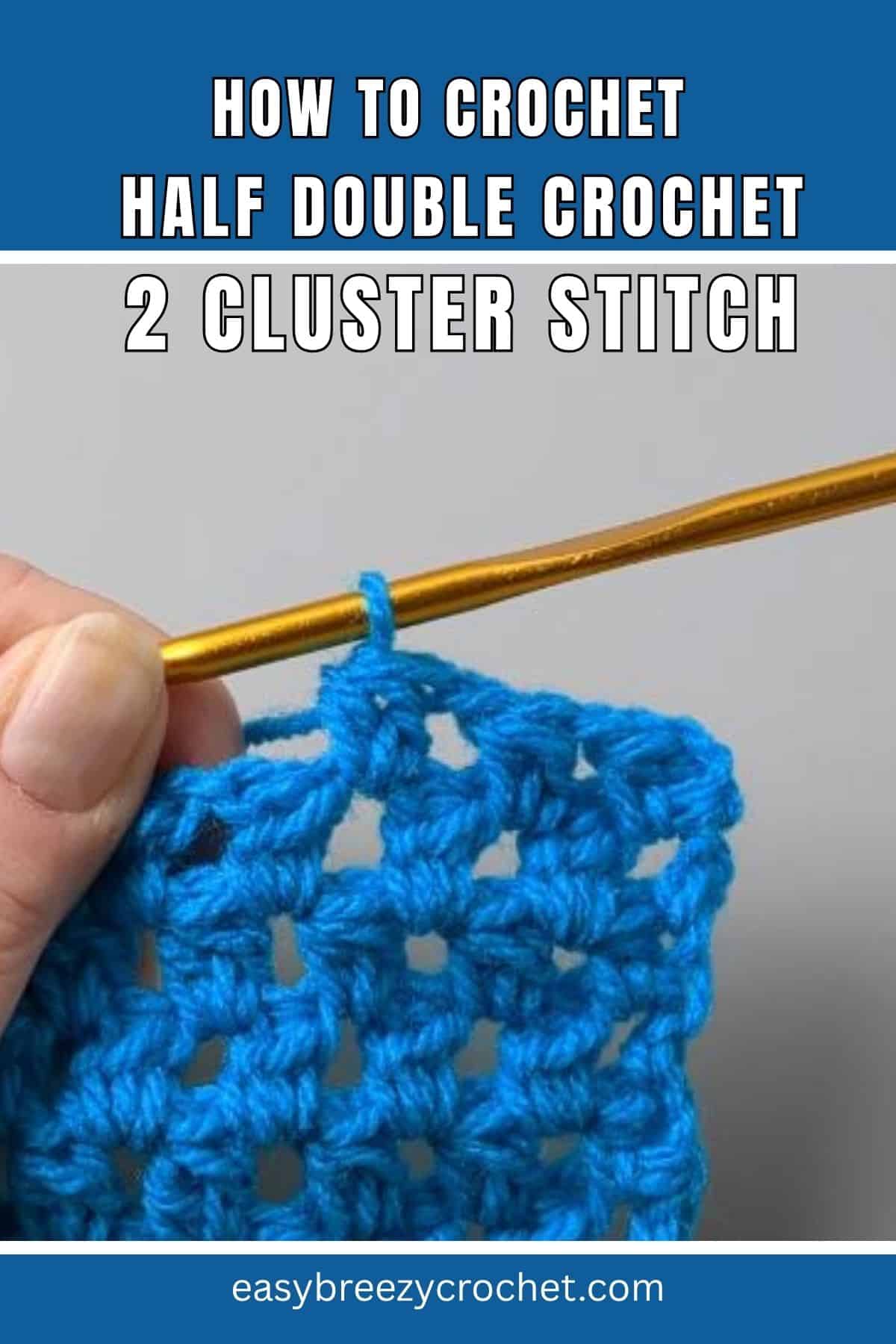
The HDC2CL stitch combines two half double crochet stitches into a single cluster, creating a decorative texture while maintaining a relatively dense fabric.
This stitch is frequently used in modern crochet patterns to add visual interest without being overly complicated.
Once you understand the basic technique, you'll be able to confidently work HDC2CL stitches in rows, rounds, and textured stitch patterns.
Table of contents
- What Is an HDC2CL?
- Stitch Is Commonly Used In
- Skill Level
- Crochet Abbreviations
- How to Make a HDC2CL Cluster
- How to start the 1st HDC2CL
- Watch How To Make A HDC2CL
- Tips for Perfect HDC2CL Cluster Stitches
- Common Mistakes When Crocheting HDC2CL Stitches
- Half Double Crochet 2 Cluster Stitch FAQs
- Related Crochet Tutorials
- Stay Connected
- Comments
What Is an HDC2CL?
HDC2CL stands for Half Double Crochet 2 Cluster. It is a crochet cluster stitch made by partially completing two half double crochet stitches and then finishing them together as one stitch.
Unlike a standard half double crochet, which is completed individually, an HDC2CL joins two stitches into a single cluster. This creates a slightly raised texture and a decorative appearance that can add depth to crochet projects.
Pattern Abbreviation
HDC2CL = Half Double Crochet 2 Cluster.
Stitch Is Commonly Used In
The HDC2CL stitch is commonly found in:
- Textured blankets and afghans
- Scarves and cowls
- Hats and beanies
- Baby blankets
- Shawls and wraps
- Home décor projects
- Crochet garments
- Decorative stitch patterns and samplers
Its textured finish makes it especially popular in projects that benefit from extra visual interest and warmth.
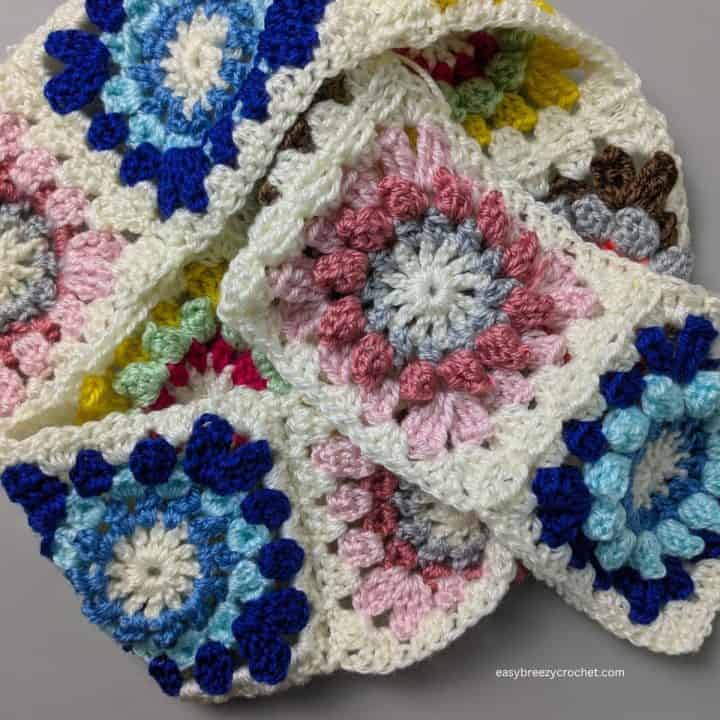
Try it in this simple 12 petal flower popcorn granny square pattern.
Skill Level
Skill level - Beginner to Easy Intermediate
Crocheters should be comfortable with:
- Making a foundation chain
- Working half double crochet stitches
- Identifying stitch tops
- Following basic crochet abbreviations
If you already know how to work a half double crochet stitch, learning the HDC2CL will be straightforward.
Crochet Abbreviations
The following abbreviations are used when working the HDC2CL stitch:
- ch = chain
- hdc = half double crochet
- hdc2cl = half double crochet 2 cluster
- rep = repeat
- sk = skip
- st = stitch
- yo = yarn over
How to Make a HDC2CL Cluster
Follow these step-by-step instructions:
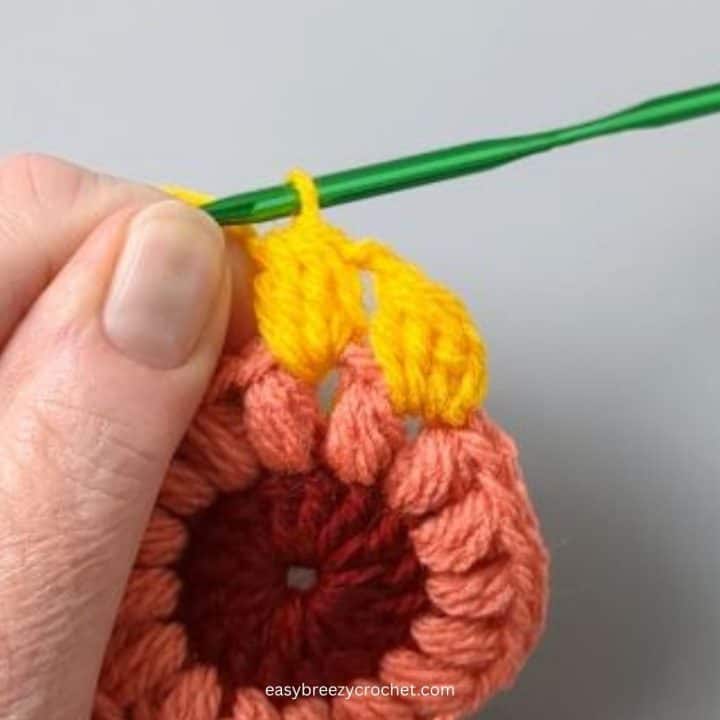
Step 1 - Yarn over (YO).
Step 2 - Insert your hook into the indicated stitch and pull up a loop. You should now have 3 loops on your hook.
Step 3 - Yarn over and pull through the first 2 loops on your hook. You should now have 2 loops remaining on the hook.
Step 4 - Yarn over again and insert your hook into the next indicated stitch. Pull up a loop. You should now have 4 loops on your hook.
Step 5 - Yarn over and pull through all 4 loops on the hook. You should now have 1 loop on the hook.
The HDC2CL stitch is complete.
How to start the 1st HDC2CL
For beginner crocheters - If you are starting a HDC2CL at the beginning of a round or row here is how to start your first cluster st.
Chain 2, this chain two will count as your first hdc, then make a half double crochet in the same stitch or next stitch as indicated in the pattern. It's not technically a HDC2CL but an easy work around.
For advanced crocheters - If you are familiar with a standing half double crochet you can start the round with this, drawing through the first two loops, then make the next half double crochet and pull though all loops on the hook to complete the stitch.
Watch How To Make A HDC2CL
Tips for Perfect HDC2CL Cluster Stitches
Creating neat and consistent HDC2CL stitches becomes easier with practice. Use these tips to achieve professional-looking results:
Maintain Consistent Tension
Even yarn tension is one of the most important factors when making cluster stitches. Try to keep each yarn over and pull-up loop the same size to ensure your clusters look uniform throughout the project.
Don't Pull Loops Too Tight
When partially completing each half double crochet, avoid tightening the loops too much. Slightly relaxed loops make it easier to pull through all remaining loops at the end of the cluster.
Count Your Stitches Carefully
Because cluster stitches combine multiple partial stitches into one completed stitch, it's easy to accidentally add or lose stitches. Count your stitches at the end of each row to maintain the correct stitch count.
Watch Your Stitch Placement
Always insert your hook into the stitches specified by the pattern. Incorrect placement can affect the texture and shape of the cluster pattern.
Practice the Pull-Through Motion
The final yarn over and pull-through is what completes the cluster. If you find this step difficult, try loosening your tension slightly during the partial stitches to make the final pull-through smoother.
Use a Hook Size That Works for Your Yarn
A crochet hook that is too small can make cluster stitches tight and difficult to complete. Using the recommended hook size for your yarn can help create well-defined clusters.
Check Your Fabric Regularly
Pause every few rows to inspect your work. Well-formed HDC2CL stitches should appear even, textured, and consistent in size across the project.
Block Finished Projects for Better Definition
Blocking can help cluster stitches open up and become more visible, especially in blankets, garments, and accessories. This final step can significantly improve the appearance of textured crochet fabrics.
Common Mistakes When Crocheting HDC2CL Stitches
Even experienced crocheters can run into issues when working cluster stitches. Here are some common mistakes and how to avoid them.
Accidentally Completing the First Half Double Crochet
One of the most common errors is finishing the first half double crochet completely before starting the second partial stitch. Remember that each half double crochet is only partially completed until the final yarn over and pull-through completes the entire cluster.
Pulling the Loops Too Tight
Tight loops can make it difficult to pull through all remaining loops at the end of the cluster. Try maintaining a relaxed, even tension throughout the stitch.
Miscounting Cluster Stitches
Because a cluster combines multiple partial stitches into one completed stitch, beginners sometimes count the individual components instead of the finished cluster. Follow your pattern carefully and count each completed HDC2CL as one stitch.
Working Into the Wrong Stitch
Incorrect stitch placement can disrupt the appearance of the textured pattern. Always identify the correct stitch before inserting your hook.
Skipping Stitches Unintentionally
Some patterns require clusters to be worked across specific stitches. Accidentally skipping extra stitches can alter the stitch count and affect the overall shape of the project.
Inconsistent Tension
Clusters can look uneven when some loops are tight while others are loose. Consistent tension helps create uniform, professional-looking texture.
Forgetting the Final Pull-Through
The final yarn over and pull-through is what joins the partial stitches into a cluster. Missing this step can leave unfinished stitches on your hook and affect the pattern's appearance.
Half Double Crochet 2 Cluster Stitch FAQs
No, they are not the same stitch. An HDC2CL (Half Double Crochet 2 Cluster) joins two half double crochet stitches together to create a textured cluster, while still showing the posts of both stitches.
A HDC2TOG (Half Double Crochet 2 Together) is a decrease stitch that combines two stitches into one to reduce the overall stitch count and help shape a project.
While the construction is similar, HDC2CL is typically used for texture, whereas HDC2TOG is used for shaping.
Yes. Crocheters who are comfortable making basic half double crochet stitches can usually learn the HDC2CL stitch quickly with a little practice.
An HDC2CL is typically worked across two stitches and counts as one completed cluster stitch.
This is often caused by tight tension. Try loosening your yarn slightly when pulling up loops so the final pull-through is easier.
Absolutely. The HDC2CL stitch is commonly used in blankets, scarves, hats, shawls, and garments because it creates attractive texture without excessive bulk.
Yes, cluster stitches generally use slightly more yarn than standard half double crochet stitches because of the additional yarn overs and loops involved.
Focus on maintaining consistent tension, using the recommended hook size, and ensuring each pull-up loop is approximately the same height.
No, you can't, because it will change the texture, drape, and stitch count of the project. It's best to follow the pattern designer's recommendations when making substitutions.
Related Crochet Tutorials
Build your skill further:
Stay Connected
Pin this post - Pin now to and take your skills to the next level.
Leave a comment - We're excited to hear your thoughts! Leave a comment below and let us know what you think.
Share on Instagram or Facebook - Capture the beauty of your finished crochet projects and share it on Instagram or Facebook! Tag us @easybreezycrochet or #ebcrochetcreations so we can see your work!
Copyright Notice - This pattern and its contents are protected by copyright law. It may not be copied, altered, redistributed, resold, translated, or used to produce video tutorials in any format, either in whole or in part.
You are permitted to sell finished items made using this pattern. However, the written pattern itself may not be sold, shared, or distributed in any form. When marketing or displaying your finished items, please photograph your own work and refrain from using any of my original images.
Sharing Guidelines For Roundups - Bloggers you are welcome to include this pattern in roundup posts, as long as you use one photo and link directly back to the original post. For full details, please refer to my Terms of Use page.
Comments
No Comments